
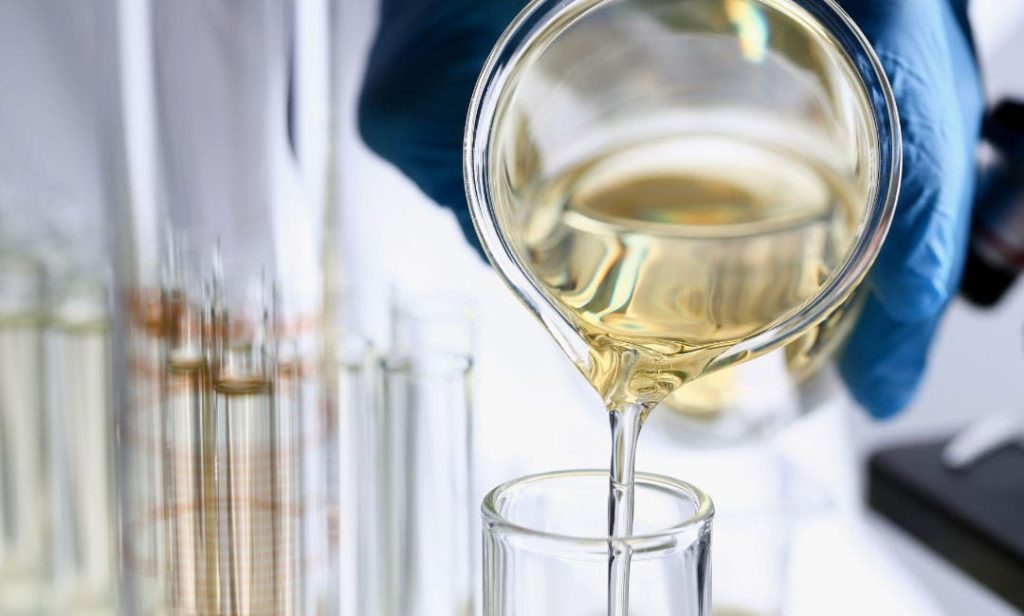
In the world of chemistry, solvents and amines play a variety of vital roles. From research laboratories to large factories, the use of these materials is essential. In this article, we will explore the properties and applications of solvents and amines, and examine their role in everyday life and industry.
Solvents
Chemical solvents play an important role in various processes such as material processing, surface cleaning, dilution of solutions, and separation of materials. Most of these solvents are in liquid or solution form, but some also exist in solid or gaseous form. In terms of chemical composition, solvents are divided into two general categories: inorganic solvents, which do not contain carbon, and organic solvents, which contain carbon. Water is known as the most common and widely used inorganic solvent.
Solvents are widely used in industry due to their unique properties. Some solvents can be recycled and reused and are beneficial to the environment, while others can harm the environment. In the continuation of this article from the World Journal of Physical Chemistry, we will take a detailed look at the properties and applications of various chemical solvents. Join us to learn more about this topic.
Types of solvents
Types of solvents can be generally divided into two categories: polar and non-polar. But if we classify solvents based on their chemical nature, we see that they are divided into two categories: organic solvents and inorganic solvents:
- Aqueous solvent: Water is a solvent for polar molecules and a solvent used by living organisms. All ions and proteins in the cell dissolve in intracellular water. In fact, solutions whose solvent is water are called aqueous solutions.
- Organic solvent: Organic solvents are divided into three categories according to their chemical structure: hydrocarbon, oxygen and halogen.
- Hydrocarbon solvents: They are solvents that have carbon and oxygen in their compounds and are divided into two categories: aliphatic and aromatic, such as alcohols and glycol ethers. These solvents are obtained from crude oil.
- Aliphatic solvents: These solvents are substances that do not have aromatic rings in their structure, such as alkanes and alkenes.
- Aromatic solvents: These solvents are used in the production of paints and inks and agricultural chemicals, such as benzene, xylene and toluene. The simplest aromatic compound is benzene, which is used in the manufacture of rubber, paints and the production of resins, adhesives and nylon, and is also used in industrial solvents to remove grease from surfaces.
- Oxygenated solvents: This category includes alcohols, ketones, aldehydes and glycol ester ethers. Ethanolamine is one of these solvents. This compound has both alcohol and amine groups, which is why monoethanolamine, diethanolamine and triethanolamine are widely used in various industries.
Amines
Amines are defined as derivatives of ammonia in which one or more hydrogen atoms have been replaced by alkyl or aryl groups. This change allows amines to be divided into two main groups: alkylamines and arylamines. Structurally, amines are similar to ammonia, except that the nitrogen atom in amines can bond to up to three hydrogen atoms.
In contrast, compounds in which the nitrogen is attached to a carbonyl group are called amides. Amides have the structure R–CO–NR′R″ and differ in chemical properties from amines.
Types of amines
Based on the way hydrogen atoms are replaced by the ammonia molecule, amines can be divided into the following four categories:
- Primary amine: In primary amines, one of the hydrogen atoms of the ammonia molecule is replaced by an alkyl or aryl group. Examples include methylamine (CH3NH2) and aniline (C6H5NH2).
- Secondary amine: In secondary amines, two organic functional groups replace the hydrogen atoms of the ammonia molecule. For example, dimethylamine ((CH3)2NH) and diphenylamine ((C6H5)2NH) are examples of these amines.
- Tertiary amine: In tertiary amines, all three hydrogen atoms are replaced by an organic functional group, which can be an aryl or aromatic group.
- Trimethylamine (N(CH3)3) and ethylenediaminetetraacetic acid (EDTA) are examples of this type of amine.
- Cyclic amines: Cyclic amines are actually the second or third type in the aromatic ring structure. For example, the compounds piperidine ((CH2)5NH) and aziridine (C2H5N) are cyclic amines.
